Three-Phase Heaters: Commercial Electric Buying Guide
Three-Phase Electric Heaters: What to Check Before You Buy
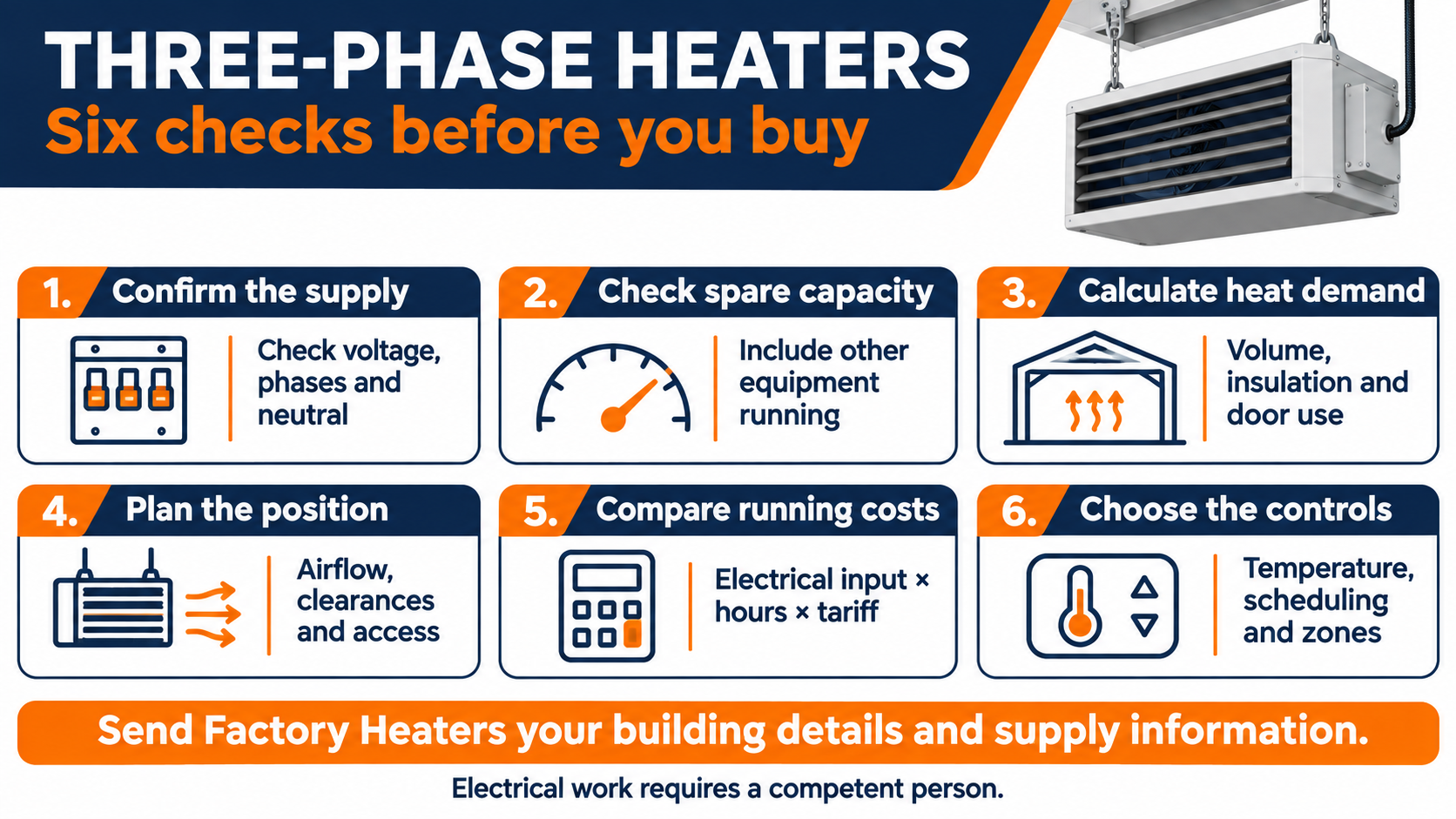
Three-phase heaters can provide substantial electric heat for warehouses, factories and commercial workshops, but having a three-phase supply does not mean your building can support any heater. Before ordering, confirm the supply requirements, spare electrical capacity and the heat output your building actually needs. Then check the mounting position, running costs and controls.
A unit that looks right on price and kW output can still be unsuitable if the electrical demand exceeds the capacity available on site. Equally, a powerful heater will struggle if its airflow cannot reach the occupied area or warm air escapes through loading doors throughout the day.
This guide focuses on electric warm air space heaters used to heat commercial buildings.
What are three-phase heaters?
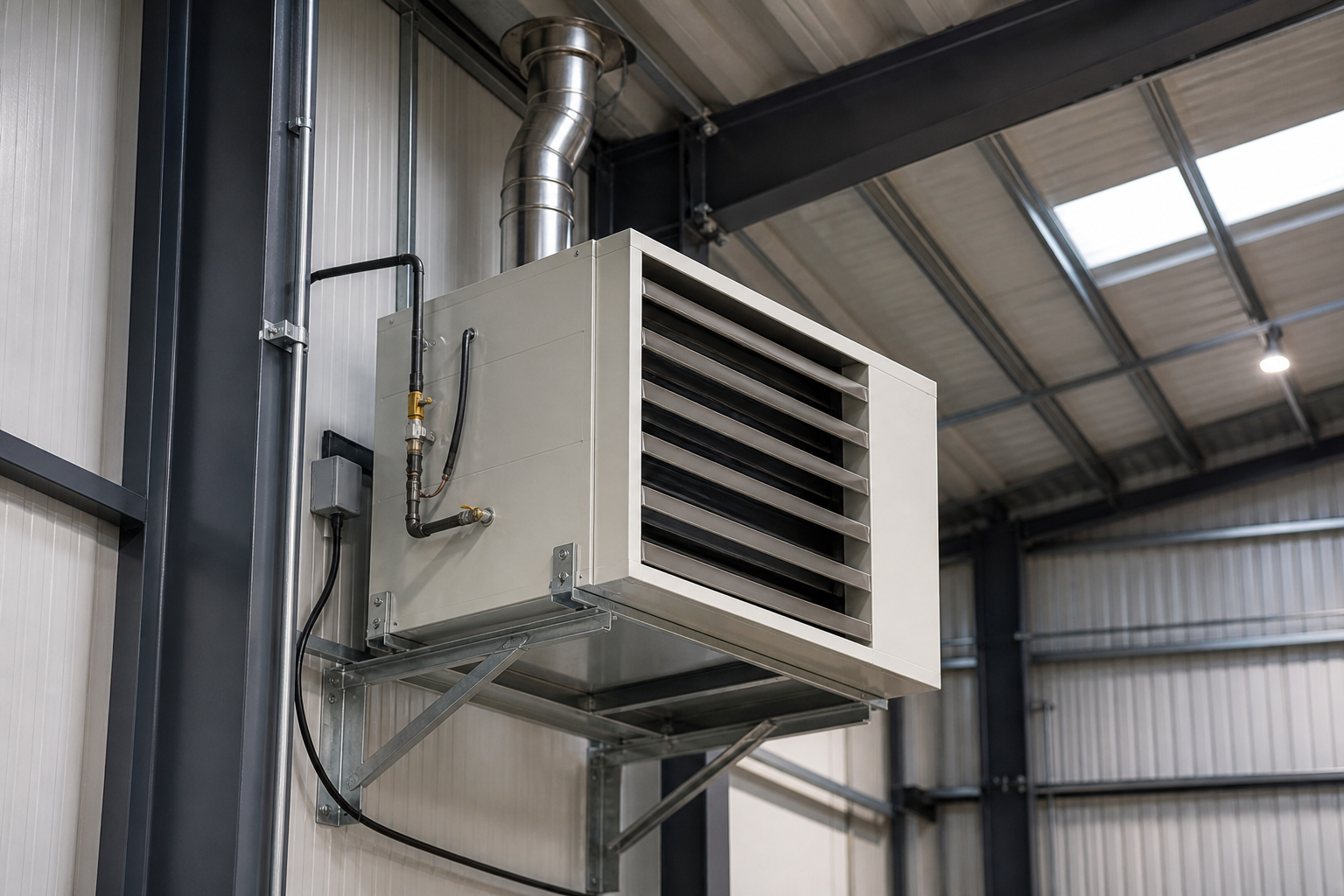
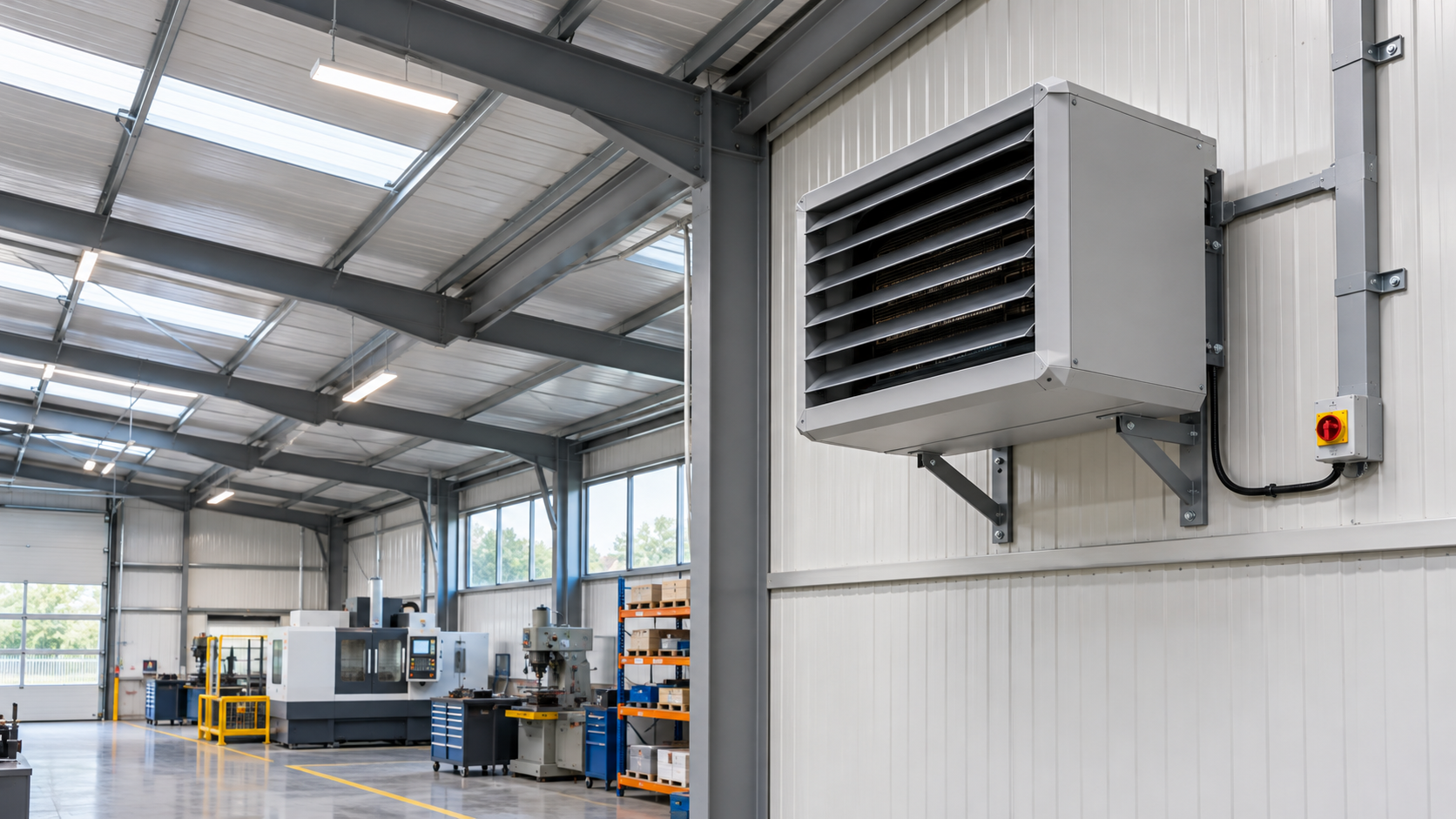
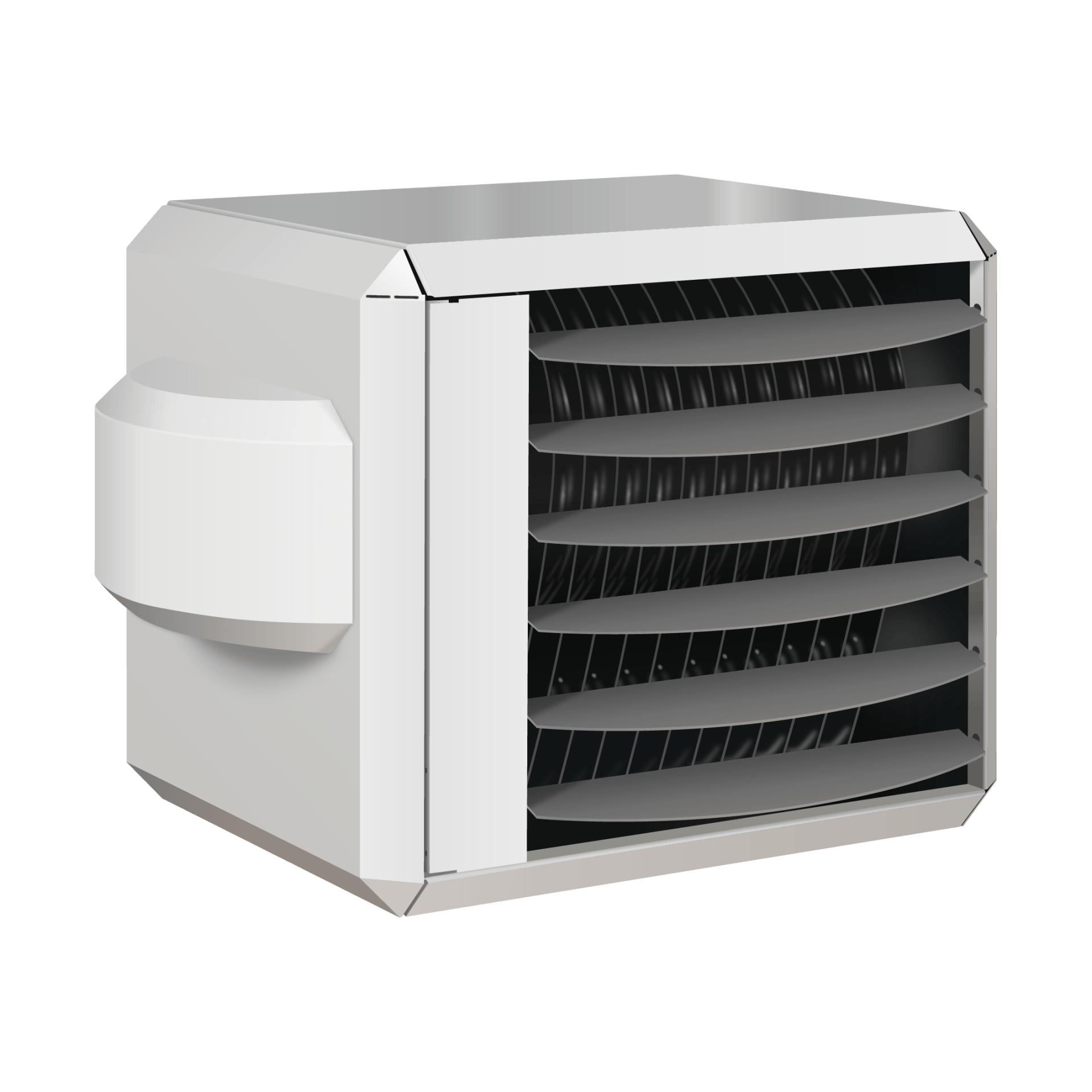
A three-phase electric warm air heater uses electric resistance elements to generate heat and a fan to distribute warmed air. It connects to a compatible three-phase electrical supply rather than an ordinary domestic socket.
The heater's specified supply matters. Voltage, number of phases, neutral requirements and maximum current must match the proposed installation. Do not assume every industrial heater has the same connection requirements.
These units do not burn gas and need no combustion flue. They still require suitable positioning, electrical installation and ongoing maintenance. Factory Heaters supplies electric warm air heaters for buyers considering this approach in commercial premises.
1. Confirm the supply before choosing three-phase heaters
Start with the electrical specification for the exact model. Ask your electrician to confirm the building's available supply and whether the proposed heater can be accommodated.
Check:
- Required voltage and number of phases
- Whether a neutral is required
- Maximum current per phase
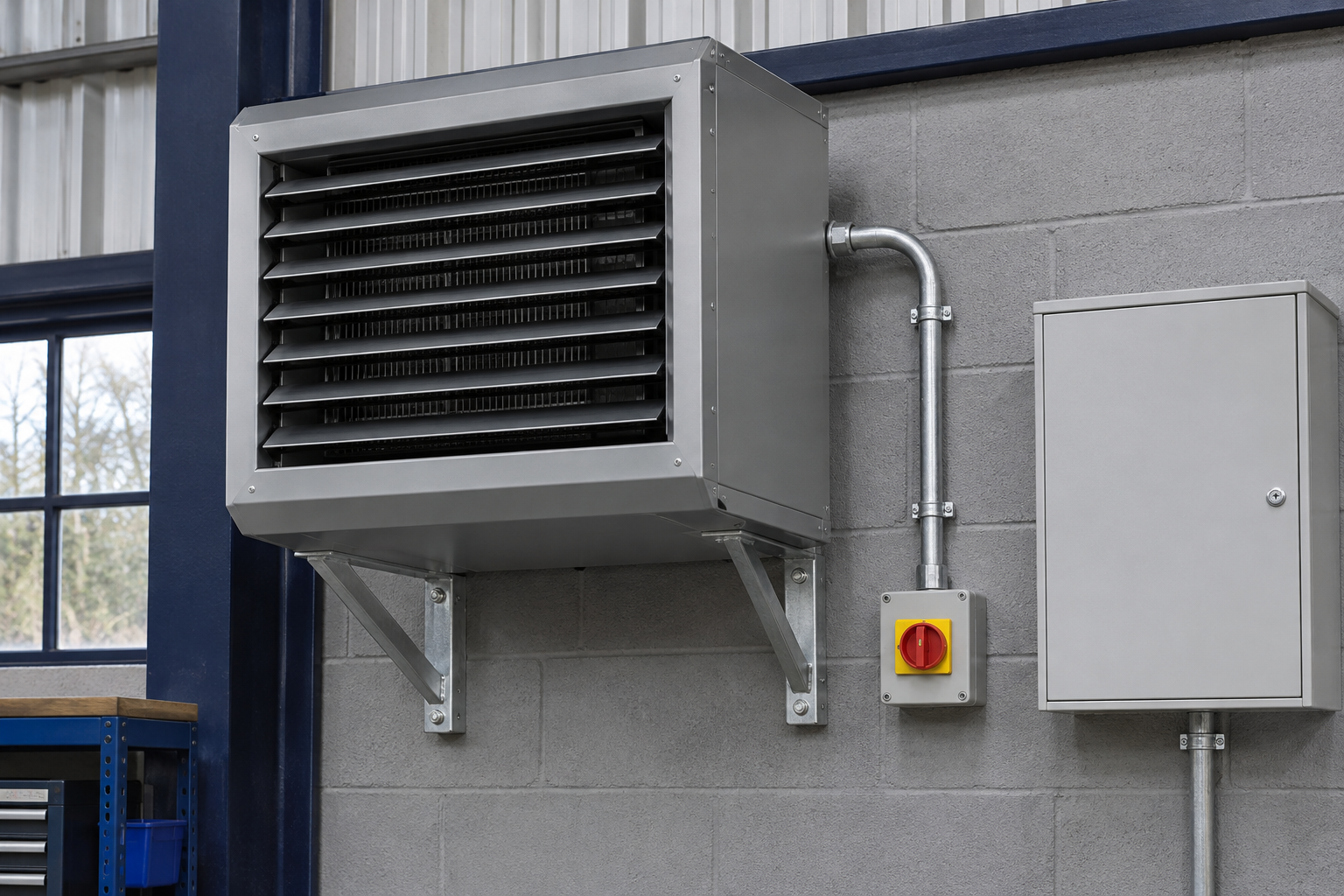
- Connection and isolation arrangements
- Manufacturer requirements for protection and installation
- The condition and suitability of the existing distribution equipment
A three-phase socket elsewhere in the building is not proof that it can supply the heater you intend to buy. Its circuit and protection may have been designed for a different load.
The Winterwarm EH installation manual is a useful example of the information to review: its specification table separates supply, heat output, nominal electrical power and current. Always check the documentation supplied for the particular unit and revision being ordered.
2. Check spare capacity, including other equipment
The relevant question is how much capacity remains when the rest of the business is operating. Machinery, compressors, lighting, charging equipment and other heating loads may run at the same time.
Adding several heaters can change the assessment considerably. A workshop that can accommodate one unit may not support three operating together at full output. Your electrician should consider the distribution of loads across phases and the overall installation, rather than looking at one spare circuit in isolation.
Ask for this assessment before committing to equipment. Any necessary supply or distribution upgrades belong in the project budget, alongside the heater, controls and mounting equipment.
HSE states that people working on electrical equipment or installations must be competent for the work involved. Its guidance on electrical work and competence explains the need for appropriate training and experience.
3. Match heat output to the building
Electrical capacity sets a limit on what can be connected. It does not determine how much heating the building needs.
A heater selection should account for building dimensions, insulation, desired temperature, outside conditions and air movement. Floor area alone misses ceiling height, roof losses and the effects of opening large doors.
Gather these details before requesting a recommendation:
- Length, width and internal height in metres
- Wall and roof construction and insulation condition
- Window and rooflight areas
- Loading-door sizes and opening patterns
- Extraction or ventilation equipment operating during heating
- Required temperature and working hours
- Racking, partitions and machinery that obstruct airflow
- Whether the whole building or selected areas need heating
For a large or complicated building, a heat-loss assessment provides a stronger basis for selection than a generic watts-per-square-metre estimate. Our warehouse heaters page provides a route into products for larger commercial spaces.
Heat output and electrical input are different specifications
Heat output describes the useful heating duty. Electrical input describes the power drawn by the unit, including associated equipment such as its fan. Current per phase describes the load on each phase of the supply.
Use heat output to assess heating capability, electrical input to estimate energy consumption, and manufacturer current data when the electrical installation is assessed. A model name alone is not a reliable substitute for any of these figures.
4. Plan mounting, airflow and service access
A warm air heater needs a clear route to distribute heat. Racking immediately in front of the discharge, a low mezzanine or an unsuitable mounting height can prevent heat reaching the intended area.
Check the manufacturer's mounting requirements, air throw, clearances and service-access instructions. Consider where the return air comes from and whether the discharge will create uncomfortable draughts at workstations.
High ceilings require particular attention. Warm air can collect above the occupied zone, so a larger heater is not always the answer to cold conditions at floor level. Air distribution and, where appropriate, destratification should be considered as part of the design.
If only a few people work in a small part of a draughty building, whole-space warm air heating may not be the best starting point. Review the heating approach before choosing the fuel or output. The existing gas-versus-electric warm air heater guide compares the broader options.
5. Calculate running costs using electrical input
Three-phase power does not automatically make resistance heating cheaper per kWh of heat. It enables suitable equipment to draw power through a compatible supply; it does not remove the energy cost of producing heat.
For a basic estimate:
Energy cost = electrical input in kW × equivalent full-load hours × electricity price in £/kWh
For example, an assumed electrical input of 20 kW operating at full load for four hours uses 80 kWh. At an illustrative tariff of £0.25/kWh, that costs £20. These are calculation assumptions, not a quoted tariff or a performance claim for a particular heater.
Real consumption depends on the thermostat, output stages, building heat loss, weather and operating pattern. Four hours with the heater enabled is not necessarily four hours at full input.
Use your business electricity contract and include any relevant capacity or standing charges when comparing total costs. Obtain installation costs too: a low purchase price can be outweighed by electrical upgrades. Compare suitable options in the commercial warm air heater range once the building and supply requirements are understood.
6. Choose controls that suit the working day
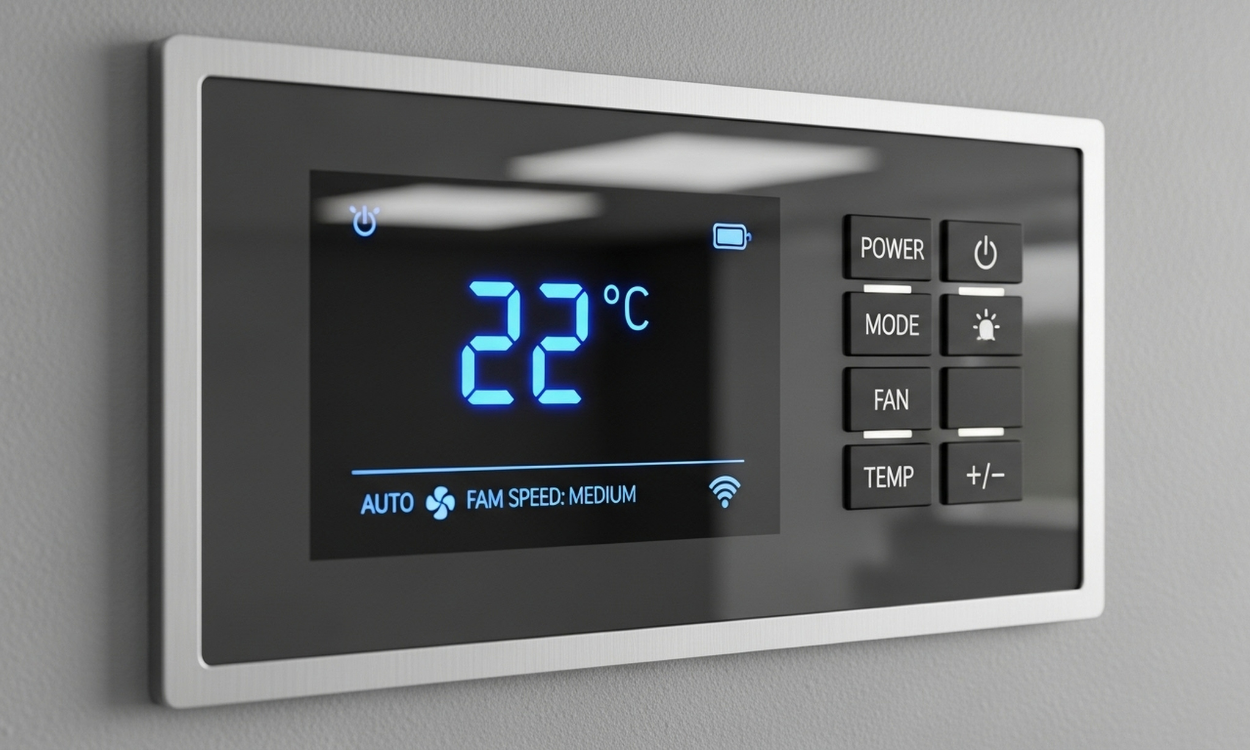
Specify controls alongside the heater. Check what is included, what must be bought separately and whether the controls can manage the number of units proposed.
Useful questions include:
- Can heating follow shift times and weekend closures?
- Can separate areas have different temperature settings?
- Where will the temperature sensor be positioned?
- How does the heater reduce output as demand falls?
- Is frost protection needed outside working hours?
- Can authorised staff adjust settings without disrupting the schedule?
A sensor next to a loading door may respond to cold air entering locally. A sensor affected by the heater discharge may stop heating before the wider space is comfortable. Sensor position should reflect the control strategy and manufacturer's instructions.
Comparing fixed and portable electric heaters
Buying consideration | Fixed warm air heater | Portable industrial heater
Typical role | Regular heating from a planned position | Flexible or temporary heating where suitable |
Space | Keeps the floor clear when wall or ceiling mounted | Needs an appropriate floor location |
Supply | Connection arranged for the selected unit | Compatible supply and connection still required |
Distribution | Position and air throw planned around the building | Changes when the unit is moved |
Controls | Check thermostat and scheduling compatibility | Check the controls on the particular product |
Portability does not remove electrical-capacity or positioning requirements. Likewise, a fixed unit is not automatically the correct choice for every building. Match the product to the operating pattern.
What to compare in the Winterwarm EH range
Factory Heaters lists EH models across several outputs, including the EH15 at 15 kW, EH20 at 19.8 kW and EH40 at 39.6 kW. These examples show the breadth of the range; they are not recommendations for particular floor areas.
Once the required heating duty is known, compare the corresponding supply requirements, airflow, dimensions, mounting arrangements and controls. Browse our Winterwarm heaters to see the available models and associated products.
Maintenance still matters
Electric heaters have no gas burner or combustion flue, but fans, elements, connections and controls still need attention. Follow the manufacturer's instructions for inspection and cleaning, allowing for the dust and operating conditions on site.
HSE's guidance on electrically powered work equipment explains employers' responsibility to keep equipment safe. Arrange suitable maintenance and use a competent person where work requires electrical expertise.
Need help choosing a three-phase heater?
Send Factory Heaters your building dimensions, ceiling height, insulation details, door-opening pattern, required temperature and operating hours. Include the available electrical-supply information confirmed by your electrician and any existing heater details.
Request a heater recommendation so we can help identify appropriate products. Final connection suitability should be confirmed before ordering. For a project requiring a site survey, heating design or installation, contact Winrow through its industrial heating installation service.
Can I run a three-phase heater from a normal socket?
No. A heater specified for three-phase power needs a compatible supply and connection. Some models support alternative supply configurations, but only where expressly permitted by the manufacturer and assessed by a competent electrician.
Does a three-phase supply mean I have enough capacity?
No. Spare capacity depends on the incoming supply, distribution equipment and other loads operating at the same time. Check the proposed heater and any additional units together.
Are three-phase heaters cheaper to run than single-phase heaters?
Not simply because they use three phases. Resistance-heating costs depend primarily on electrical energy consumed and the tariff, with controls and heat distribution affecting how much energy is needed.
What size electric heater do I need for a workshop?
The answer depends on heat loss, building volume, insulation, door use and target temperature. Supply limits must also be checked. Provide these details before choosing an output.
Do electric warm air heaters need a flue?
Electric resistance warm air heaters do not burn fuel and need no combustion flue. They still need clearances, airflow and mounting arrangements that meet the manufacturer's instructions.
Can one thermostat control several heaters?
Some compatible systems allow this, but check the controller, number of units and zoning requirements. A large building may benefit from separate temperature sensors or control zones.
Share.
Shop Our Industrial Heating Solutions
Latest.